
Day 754

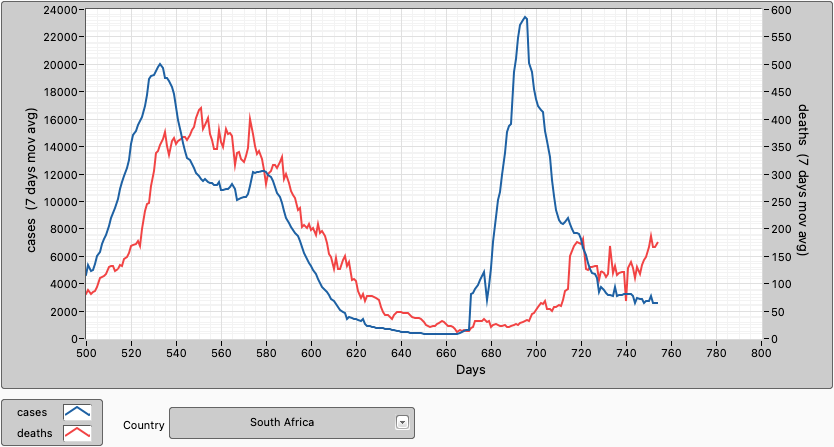
South Africa reported 257 deaths yesterday. Cases and deaths are flat. 29,1% of the population are fully vaccinated and 34,2% have had at least 1 dose. 1,3% of the population has had a booster shot.
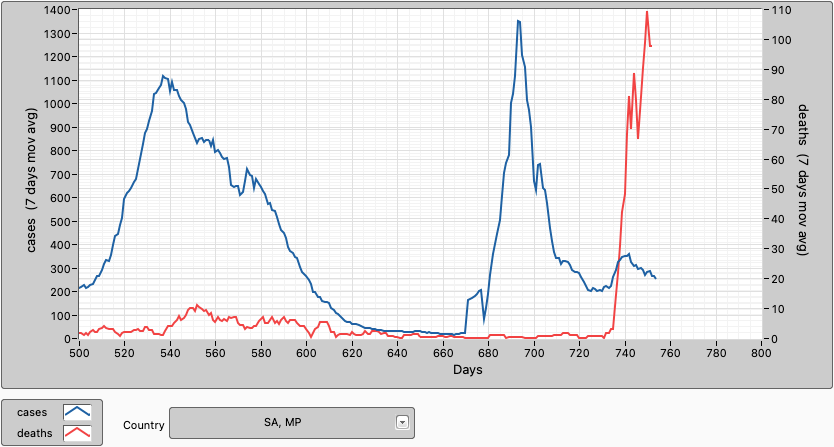
We see that most of the deaths being reported recently, are for Mpumalanga.
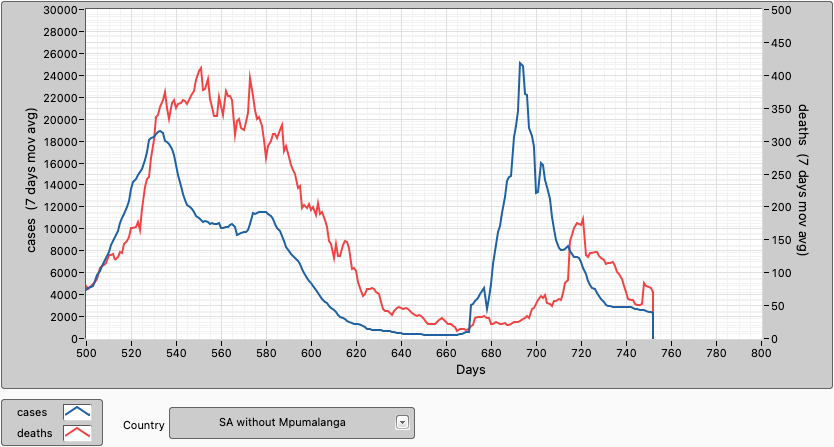
If we exclude Mpumalanga from the country aggregate we see that cases and deaths do appear to be trending down.
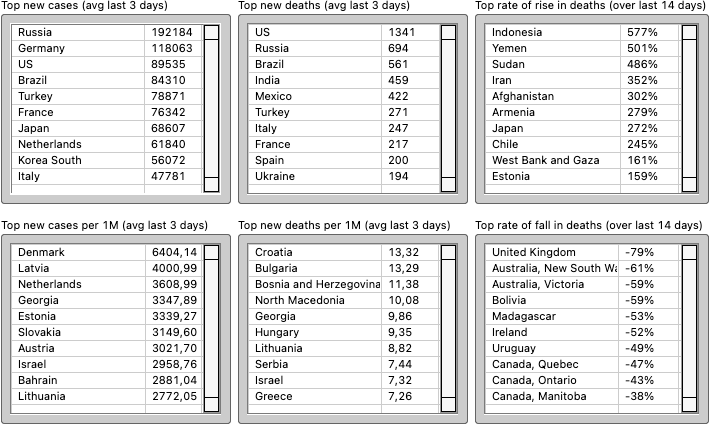
Let’s look at the top 10 lists for yesterday.
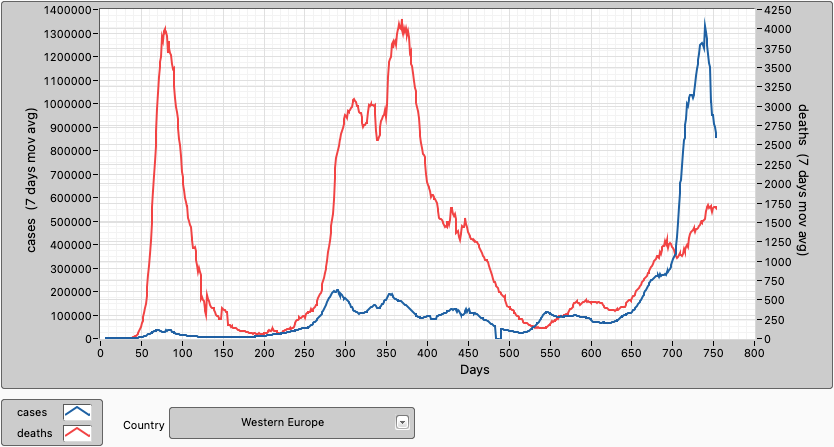
In Western Europe, cases are trending down now and deaths seem to have peaked as well. In the EU 72,4% of the population are fully vaccinated and 75,3% have had at least 1 dose. 46,9% of the population has had a booster shot. The EU and Western Europe are not the same but there is a large overlap between them so I think it is useful to quote EU vaccinations to provide context for this graph.
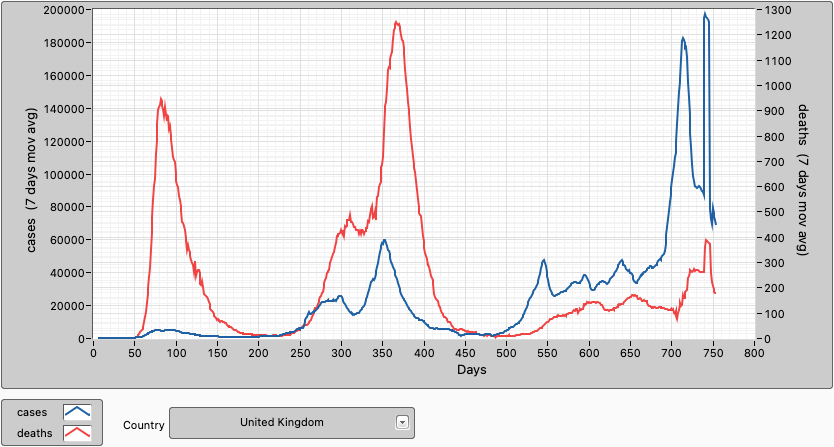
In the UK cases and deaths are trending down now. 72,7% of the population are fully vaccinated and 78,3% have had at least 1 dose. 56,3% of the population has had a booster shot.
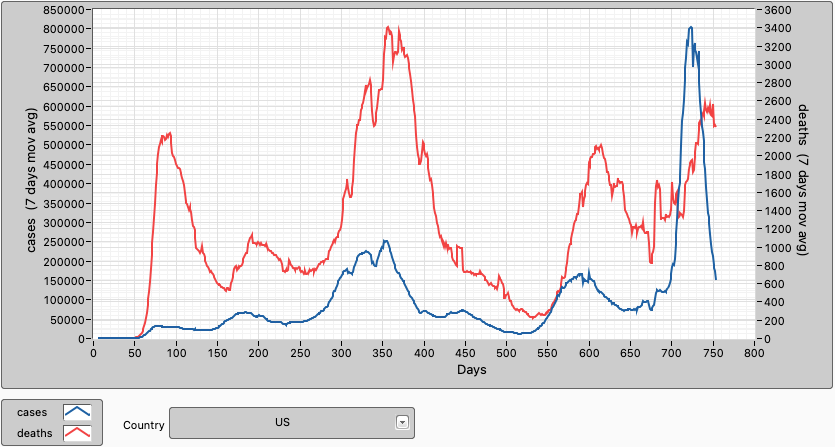
In the US cases are trending down now while deaths are flat. 63,8% of the population are fully vaccinated and 75,2% have had at least 1 dose. 27,3% of the population has had a booster shot.
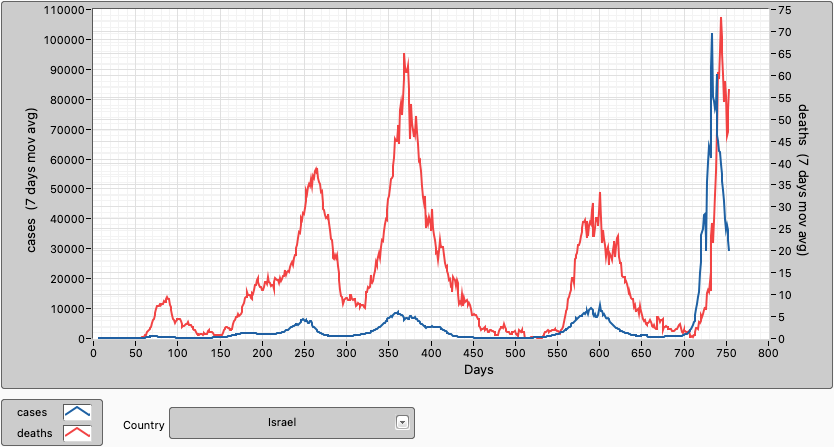
In Israel, cases and deaths are trending down now. 70,1% of the population are fully vaccinated, 73,1% have had at least 1 dose and 55,9% have had a booster shot.
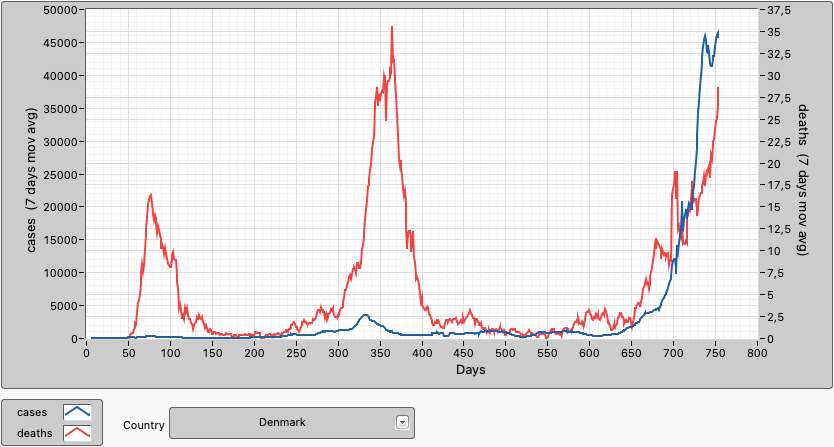
In Denmark, all Covid-19 restrictions have been lifted from February 2022 (day 740). 81,4% of the population are fully vaccinated, 83,2% have had at least 1 dose and 61,9% have had a booster shot.
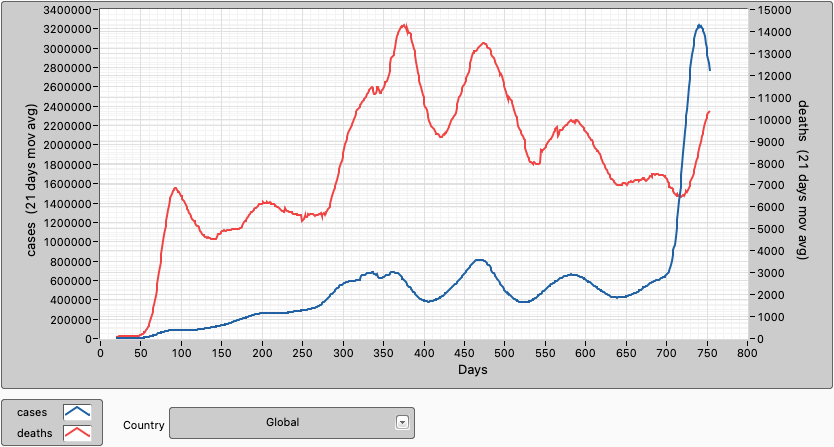
Globally, cases are trending down now and deaths seem to have peaked as well. More than 10.4 billion doses of vaccine have been administered—132 shots for every 100 people worldwide.
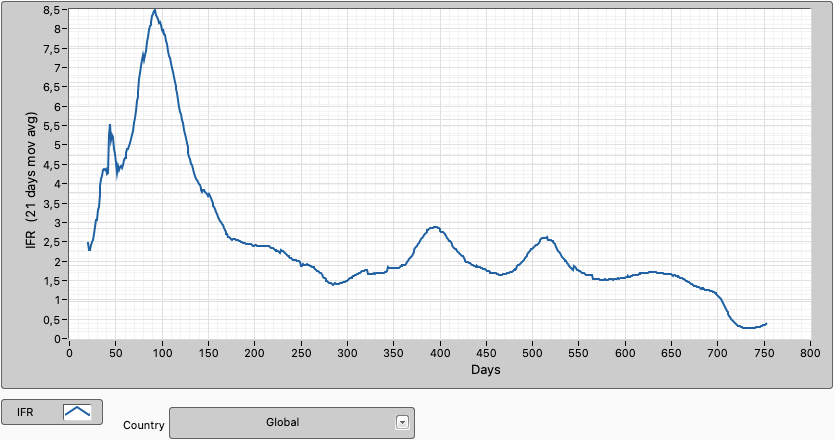
If we look at the infection fatality rate (the ratio of deaths to cases) we see that it has generally been trending down since the start of the pandemic.
All vaccination data is obtained from the Bloomberg vaccine tracker.
All the global and US cases and deaths data is obtained from the Johns Hopkins University.
The provincial South African data is obtained from the University of Pretoria.